

Your backyard should feel like a peaceful escape, but relaxing outdoors isn't always easy when neighboring houses overlook your patio or nearby activity makes the space feel exposed. Fortunately, creating a little more privacy doesn't necessarily require installing an expensive fence or completely redesigning your yard. Simple landscaping choices, decorative screens, and clever furniture arrangements can help create a more secluded atmosphere. Whether you have a spacious lawn or a compact patio, a few thoughtful changes can make outdoor living much more enjoyable.
Create Natural Privacy With Trees and Shrubs
One of the most attractive ways to add backyard privacy is by using plants to create a natural screen. Tall shrubs, evergreen trees, and dense hedges can help block unwanted views while making your outdoor space feel lush and inviting. Unlike traditional fencing, greenery adds texture, seasonal interest, and a softer appearance to the landscape. Evergreens are especially useful when you want privacy throughout the year, while flowering shrubs can provide attractive color during the growing season.
Before planting, consider how tall and wide each variety will grow. Arborvitae, holly, and certain junipers are popular screening options, but suitability depends on your climate, available sunlight, and soil conditions. Avoid placing large trees too close to foundations, underground utilities, or neighboring properties. If you don't want to wait years for plants to mature, purchasing larger nursery specimens can provide quicker coverage, although they'll generally cost more. A thoughtfully planned planting arrangement can improve privacy while enhancing your backyard's appearance.
Install Decorative Privacy Screens
Privacy screens offer a practical alternative when you want to block specific sightlines without enclosing your entire backyard. Available in wood, metal, composite, and other materials, decorative panels can help create separation between a patio and neighboring properties. Slatted wood screens provide a modern appearance, while lattice panels work beautifully in traditional gardens. Some designs allow light and airflow to pass through, helping the space feel open rather than completely enclosed.
Consider placing a screen along one side of your seating area or behind an outdoor dining table. You don't necessarily need a continuous wall to improve privacy. Sometimes, a strategically positioned panel is enough to block the view from a nearby window or deck. Freestanding screens can offer flexibility, but they must be properly anchored to withstand wind. Permanent installations may also be subject to local height limits, property setbacks, or homeowners association rules. Choose a design that complements your outdoor furniture and existing landscaping for a coordinated appearance.
Use Outdoor Curtains for a Cozy Retreat
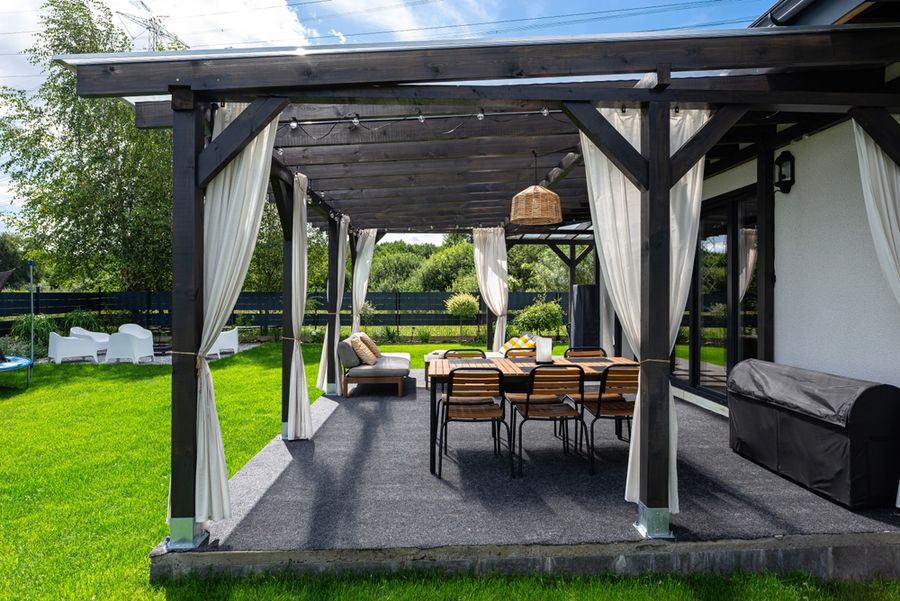
Outdoor curtains can make a patio, pergola, or covered seating area feel more secluded without requiring major construction. Hanging fabric panels around an outdoor living space creates a soft, relaxed atmosphere while providing adjustable privacy. You can pull the curtains closed when neighboring activity feels distracting or leave them open when you want more sunlight and airflow. Light neutral fabrics create an airy, resort-inspired look, while darker colors can provide a stronger visual barrier.
Choose curtains specifically designed for outdoor use, since ordinary indoor fabrics may fade, absorb moisture, or develop mildew when exposed to the elements. Weather-resistant materials are generally easier to maintain, although they may still require occasional cleaning. Use sturdy outdoor-rated rods or tracks, and secure the panels so they don't blow around excessively. Curtains work particularly well around pergolas, gazebos, and covered porches with suitable support structures. They're an appealing choice for homeowners who want privacy that can be adjusted throughout the day.
Add Height With Planters and Trellises
If your backyard is small or you don't have room for large shrubs, vertical gardening can provide an attractive privacy solution. Tall planters filled with ornamental grasses, compact evergreens, or climbing plants can help block views without taking up much ground space. Trellises are especially useful along patios, fences, and property boundaries because they encourage plants to grow upward rather than spread across the yard. Climbing roses, clematis, and other suitable vines can also add color and interest.
For quicker coverage, consider placing several large containers close together along the edge of a seating area. Just remember that tall plants need appropriately sized containers, adequate drainage, and regular watering. Trellises should be securely supported, particularly when mature vines add weight or catch the wind. Check whether climbing plants require additional training or pruning to maintain their shape. It's also important to research growth habits before planting, since some vigorous vines can damage structures or spread aggressively. Vertical greenery offers a beautiful combination of privacy and decorative appeal.
Rearrange Your Outdoor Furniture Strategically
Sometimes, creating a more private backyard doesn't require buying anything new. Simply reconsidering where you place your outdoor furniture can make a noticeable difference. A patio table positioned directly beside a shared fence might feel exposed, while moving it closer to the house or behind existing landscaping could provide a greater sense of separation. Pay attention to sightlines from neighboring windows, elevated decks, and frequently used outdoor areas before deciding where to arrange your seating.
Creating distinct outdoor zones can also help make a backyard feel more secluded. For example, placing a lounge chair behind a large planter or arranging seating near a garden bed can establish a comfortable retreat. Outdoor rugs, small tables, and coordinated furniture help define the area without requiring permanent structures. If your yard has a natural corner or partially sheltered section, consider turning it into a reading nook or conversation space. A thoughtful layout can improve comfort and privacy while making better use of the space you already have.
Create a Sense of Separation With Shade Structures
Pergolas, gazebos, and shade sails can make an outdoor seating area feel more sheltered, particularly when nearby second-story windows overlook your backyard. While they're often installed primarily for sun protection, overhead structures can also help reduce certain elevated sightlines. A pergola with a suitable canopy or adjustable shade panels can create a more enclosed feeling, while a gazebo with side curtains offers additional flexibility for privacy and weather protection.
Before choosing a structure, consider the size of your yard and how much coverage you actually need. A large gazebo may overwhelm a compact patio, while a smaller pergola can provide a defined outdoor retreat without dominating the landscape. Shade sails are another option, although proper mounting and tension are essential for safety. Keep in mind that overhead shade alone won't block views from neighboring ground-level areas. Combining a shade structure with greenery or side panels can create a more effective solution while making the space comfortable during sunny afternoons.
Turn Your Backyard Into a More Peaceful Escape
Creating backyard privacy doesn't have to involve building a tall fence or spending thousands of dollars on landscaping. Often, the best results come from addressing the specific areas where your outdoor space feels exposed. A few strategically placed shrubs, a decorative screen, or a thoughtfully arranged seating area can make a surprising difference. Combining natural elements with practical features can also create a more attractive environment while helping you feel comfortable spending time outside.
Start by identifying where unwanted views originate and deciding which parts of your backyard need the most privacy. You may only need to screen a patio, create a sheltered reading corner, or soften the view along one property line. Choose improvements that complement your landscape, fit your budget, and are manageable to maintain. With a little planning and creativity, your backyard can feel more like a personal retreat where you can relax, entertain, and enjoy the outdoors without feeling constantly on display.