

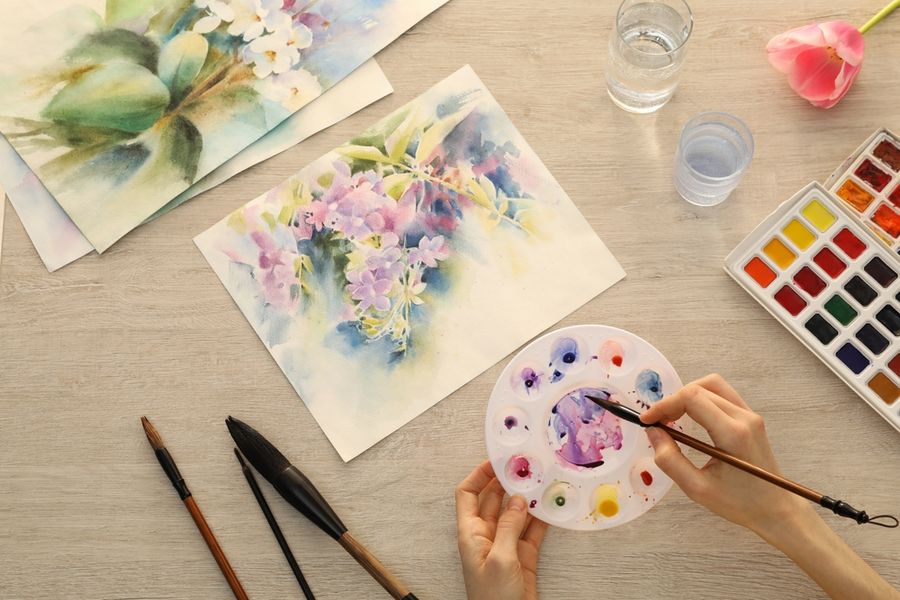
Watercolor painting has a special charm, with soft colors, flowing brushstrokes, and beautiful effects that make every piece feel unique. Whether you're interested in painting flowers, landscapes, or simple abstract designs, watercolor offers endless opportunities to get creative. Best of all, you don't need natural artistic talent or expensive supplies to begin. A few basic materials and a willingness to experiment are enough to get started. With some patience and practice, watercolor painting can become a relaxing hobby you'll look forward to enjoying.
Gather the Essential Watercolor Painting Supplies
Getting started with watercolor painting doesn't require an elaborate collection of art supplies. A basic watercolor paint set, a few brushes, and suitable paper are enough for your first projects. Watercolor paints come in two main forms: pans and tubes. Pan sets contain dried paint that activates with water, making them convenient for beginners. Tube paints offer concentrated color that you squeeze onto a palette. Either option works well, although a small pan set with 12 basic colors is usually an affordable starting point.
Paper is especially important because ordinary printer paper tends to wrinkle and tear when exposed to water. Look for watercolor paper weighing approximately 140 pounds, or 300 grams per square meter, which handles moisture much better. Cold-pressed paper has a slightly textured surface that's useful for many beginner techniques. For brushes, start with a medium round brush, a smaller detail brush, and a flat brush. You'll also need a mixing palette, two containers of water, paper towels, and a pencil for light sketching. There's no reason to buy professional-grade equipment immediately.
Learn How Water and Paint Work Together
One of the most important things to understand about watercolor painting is that water controls much of the final appearance. Unlike acrylic or oil paints, watercolors rely on transparent layers of pigment that allow light to reflect through the paper. Adding more water generally produces lighter, softer colors, while using more concentrated pigment creates richer tones. Too much water can cause colors to spread unpredictably, while too little may leave the paint looking dry or uneven.
Before attempting a complete painting, practice creating different shades using a single color. Paint a dark stroke, rinse your brush slightly, and gradually add more water to create lighter versions of the same shade. You can also experiment with color mixing by combining two pigments on a palette. Try blending blue and yellow to create green or mixing red and blue for different purple tones. Pay attention to how colors change as they dry, since watercolor often appears lighter afterward. Understanding the relationship between paint, water, and paper makes more advanced techniques easier to learn.
Practice Basic Watercolor Techniques
Watercolor painting includes several techniques that create different visual effects, and learning a few basics will give you plenty of creative options. One of the most useful is wet-on-dry painting, where you apply wet paint to dry paper. The technique produces relatively defined edges and provides greater control over shapes. Wet-on-wet painting involves applying color to a damp surface, allowing pigments to spread and blend naturally. It's particularly effective for creating soft skies, clouds, and abstract backgrounds.
Another essential technique is creating a wash, which involves covering an area with a thin layer of color. Flat washes produce relatively even coverage, while graduated washes gradually transition from dark to light. You can practice by painting simple rectangles or strips of color before trying larger subjects. Layering, sometimes called glazing, is another useful skill. Allow one watercolor layer to dry completely before adding another transparent layer over it. Start with basic exercises rather than complicated paintings, and give yourself time to understand how each technique behaves.
Start With Easy Subjects and Simple Projects
Choosing the right subjects can make learning watercolor painting much more enjoyable. Beginners often feel discouraged when attempting detailed portraits, complicated buildings, or realistic landscapes before mastering basic brush control. Fortunately, watercolors are particularly well suited to simple subjects that don't require perfect lines or precise details. Loose flowers, colorful leaves, sunsets, and abstract shapes are excellent starting points because their natural forms allow for creative interpretation.
Try painting a simple sunset by blending yellow, orange, and pink across damp paper. Another easy project involves creating a collection of leaves using different shades of green. You can also experiment with painting small flowers using rounded brushstrokes and adding delicate stems once the petals have dried. If you're interested in landscapes, begin with a basic scene featuring a sky, distant hills, and a few trees. Keep your first paintings small, so they're manageable to finish in one session. Completing simple projects helps build confidence while giving you opportunities to practice the techniques you've learned.
Understand Common Beginner Mistakes
Watercolor can feel unpredictable at first, and many beginners struggle with problems that are surprisingly easy to correct. One common mistake is using too much water, which can cause colors to spread beyond their intended areas or create unwanted puddles. Another is repeatedly brushing over the same section before it dries. Excessive brushing can disturb the paper surface, lift existing pigment, and leave the painting looking muddy. Mixing too many colors together can also produce dull, grayish tones rather than the vibrant shades you intended.
The best way to avoid these problems is to work patiently and pay attention to the moisture on your brush and paper. If a section looks too wet, gently touch the edge of the puddle with a clean, slightly damp brush or absorb excess water with a paper towel. Allow painted areas to dry before adding details, especially when you want crisp edges. Keep your mixing palette relatively clean and test unfamiliar color combinations on scrap paper. Remember that watercolor paintings don't need to look perfectly controlled. Unexpected blends and textures often contribute to their beauty.
Build Your Skills Through Regular Practice
Improving your watercolor painting skills doesn't require spending hours at an easel every day. Short, consistent practice sessions can help you become more comfortable with brush control, color mixing, and different techniques. Setting aside approximately 15 to 20 minutes a few times each week is a manageable way to develop your abilities without making the hobby feel overwhelming. You might dedicate one session to practicing washes and another to painting flowers or experimenting with color combinations.
Keeping a watercolor sketchbook is another excellent way to track your progress. Use it to experiment with new techniques, record favorite color mixtures, and create small paintings without worrying about producing finished artwork. Beginner tutorials and online painting demonstrations can also introduce you to different approaches and provide inspiration when you're unsure what to paint. Try following a simple tutorial, then repeat the subject using your own color choices or composition. Avoid comparing your early paintings with professional artwork. The goal is to build confidence, enjoy the creative process, and gradually develop a style that feels personal.
Let Your Creativity Flow With Every Brushstroke
Watercolor painting is a rewarding hobby because it encourages experimentation, patience, and creative expression without requiring complicated equipment. With a small paint set, a few brushes, and suitable paper, you can begin exploring beautiful colors and techniques from the comfort of your home. Learning how water affects pigment, practicing simple brushstrokes, and choosing beginner-friendly projects will help you develop a solid foundation. Some paintings may turn out exactly as you imagined, while others will surprise you with unexpected colors and textures.
Don't worry about creating perfect artwork or mastering every technique immediately. Enjoy experimenting with different subjects, celebrate small improvements, and give yourself permission to make mistakes. You might discover that you love painting delicate flowers, peaceful landscapes, colorful abstract designs, or handmade greeting cards. As your confidence grows, you can gradually invest in additional supplies and explore more advanced techniques. For now, pick up a brush, add a little water, and see where your creativity takes you. The beauty of watercolor is that every painting offers something new to learn.