

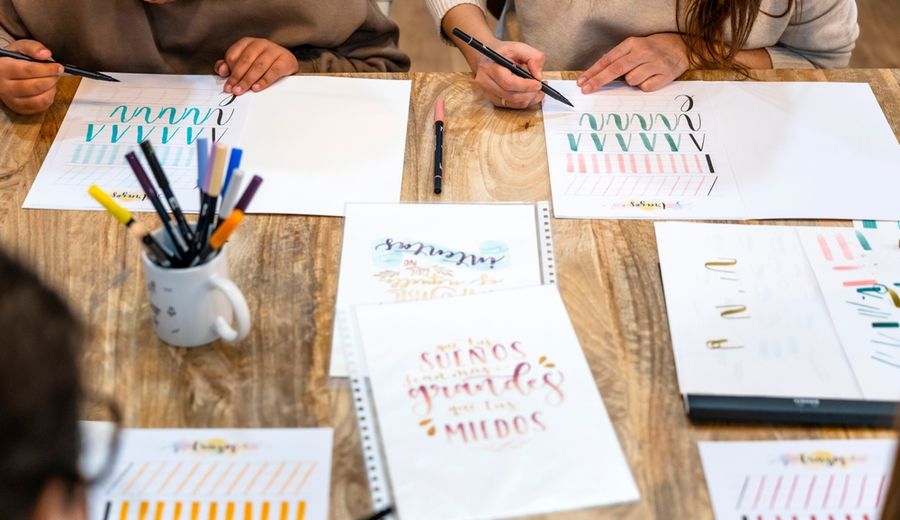
Beautiful lettering can transform an ordinary greeting card, handwritten note, or journal page into something special. Calligraphy and hand lettering offer creative ways to experiment with shapes, styles, and decorative details, even if your everyday handwriting isn't particularly neat. Better yet, getting started doesn't require artistic training or a collection of expensive supplies. With a few basic pens, some practice paper, and a little patience, you can learn to create elegant letters while enjoying a relaxing and rewarding new hobby.
Understand the Difference Between Calligraphy and Hand Lettering
Although calligraphy and hand lettering are often mentioned together, they're actually two different art forms. Calligraphy focuses on writing letters using deliberate strokes, pressure, and specialized tools to create beautiful letterforms. Traditional calligraphy often involves dip pens and ink, while modern styles frequently use flexible brush pens. Hand lettering, on the other hand, treats letters more like illustrations. Instead of writing them in continuous strokes, you carefully draw and refine each letter to create a specific design.
Both approaches offer plenty of creative possibilities, but beginners may find one more appealing than the other. Calligraphy is excellent if you enjoy practicing consistent movements and developing a distinctive writing style. Hand lettering allows more freedom to experiment with shapes, decorative flourishes, and playful compositions. You don't have to choose one permanently, either. Many artists combine calligraphy techniques with hand lettering to create beautiful designs. Understanding the differences can help you decide which skills to practice first and what supplies you'll need.
Choose the Right Pens and Basic Supplies
Getting started with calligraphy doesn't require an expensive collection of tools. For modern brush calligraphy, a small-tip brush pen is an excellent beginner-friendly choice. Pens like the Tombow Fudenosuke or Pentel Sign Pen Brush feature flexible tips that produce different line widths depending on how much pressure you apply. Larger brush pens, such as the Tombow Dual Brush Pen, are useful for creating bigger letters, although controlling their flexible tips can take more practice.
If you're interested in hand lettering, start with a pencil, eraser, ruler, and a few fine-tip markers or fineliners. Pencils allow you to sketch letter shapes before outlining them, while markers help create clean, finished designs. Smooth paper is especially important when using brush pens because rough surfaces can damage delicate tips. Rhodia pads, marker paper, or smooth practice notebooks are useful options. Beginners interested in traditional pointed-pen calligraphy can eventually try a dip pen holder, flexible nib, and suitable ink, but there's no need to purchase everything immediately.
Learn the Basic Strokes Before Writing Words
One of the biggest mistakes beginners make is jumping straight into writing elaborate words without understanding how individual strokes work. Modern brush calligraphy relies on varying pressure to create thick and thin lines. Generally, upward strokes use light pressure to produce thin lines, while downward strokes use firmer pressure to create thicker ones. Learning to control the difference is essential for developing smooth, consistent lettering. It may feel unfamiliar at first, particularly if you're accustomed to writing quickly with an ordinary ballpoint pen.
Start by practicing simple movements such as upward lines, downward strokes, curves, loops, and oval shapes. Repeat each movement slowly, paying attention to how the pen responds to changes in pressure. Once you're comfortable with individual strokes, begin combining them into lowercase letters. Letters like i, u, n, and o are useful starting points because their shapes introduce common calligraphy movements. Don't worry if your first attempts look uneven. Consistency develops through repetition, and practicing basic strokes for a few minutes each day will help build control.
Practice Letter Shapes and Different Styles
Once you've developed some confidence with basic strokes, it's time to explore complete alphabets and lettering styles. Modern calligraphy often features flowing, connected letters with decorative curves, while traditional styles may emphasize more structured proportions. Hand lettering offers even more flexibility, including bold block letters, elegant scripts, playful bubble letters, and vintage-inspired designs. Experimenting with several styles can help you understand which ones suit your interests and creative goals.
Start by choosing one alphabet style and practicing each letter individually before combining them into words. Printable practice sheets with guidelines can help you maintain consistent letter height, spacing, and slant. You can also use tracing paper to study how experienced artists construct different letterforms. When practicing hand lettering, sketch letters lightly in pencil before adding thicker outlines or decorative details. Avoid switching between too many styles during your first few sessions, since focusing on one approach makes progress easier to recognize. Once the basics feel comfortable, experimenting with new designs will be much more enjoyable.
Try Simple Lettering Projects to Build Confidence
Practicing individual letters is important, but creating small projects can make the learning process more exciting. You don't need to wait until your lettering looks professional to start making something useful. Greeting cards, gift tags, bookmarks, and journal headings are excellent beginner projects because they require relatively little space or complicated planning. Choosing short words or simple phrases also allows you to focus on letter shapes without feeling overwhelmed by an elaborate composition.
Try creating a personalized birthday card using brush calligraphy or designing a decorative quote for your desk. If you enjoy journaling, experiment with lettering the days of the week or creating attractive page titles. Hand-lettered gift tags are another easy project that can make wrapped presents feel more personal. Before working on your final paper, sketch the design lightly and consider how the words will fit together. Leave enough space between letters and avoid adding too many decorative flourishes. A simple, carefully executed design often looks more polished than one filled with unnecessary embellishments.
Develop a Practice Routine That Keeps You Motivated
Learning calligraphy and hand lettering takes patience, particularly when you're developing control over unfamiliar tools and movements. It's easy to compare your early attempts with beautiful designs shared by experienced artists online, but remember that polished lettering often represents years of practice. Progress may feel slow initially, especially when you're struggling with consistent spacing or pressure. However, spending a little time practicing regularly is generally more effective than attempting occasional marathon sessions.
Set aside approximately 10 to 15 minutes a few days each week to work on a specific skill. One session might focus on basic strokes, while another could involve practicing lowercase letters or creating a simple word design. Keep your early practice sheets so you can compare them with newer work and recognize your improvement. Online tutorials, lettering worksheets, and beginner classes can provide additional guidance when you're ready to learn new techniques. Most importantly, allow yourself to experiment and make mistakes. Developing your own lettering style should feel creative and enjoyable rather than like another demanding obligation.
Let Your Creativity Take Shape One Letter at a Time
Calligraphy and hand lettering are wonderful hobbies because they combine artistic expression with practical skills you can use in everyday life. Whether you're decorating greeting cards, personalizing gifts, or adding creative details to a journal, beautiful lettering can make ordinary projects feel more meaningful. You don't need perfect handwriting, expensive materials, or formal artistic training to begin. A few affordable supplies and a willingness to practice are enough to start developing your abilities.
As your skills improve, you may discover that you enjoy particular styles, tools, or creative projects more than others. Some people love the elegant movement of brush calligraphy, while others prefer drawing bold, decorative letters with markers and pencils. There's no single correct approach, and experimenting is part of the fun. Start with simple techniques, celebrate small improvements, and gradually challenge yourself with more detailed designs. With time and patience, you'll develop a creative skill that makes even a few handwritten words feel like a little work of art.